How to buy cars and car parts online with Lotify
Buying a used car online used to be a backup plan. Now it is where most deals start, and eBay Motors alone has more than 80,000 vehicles listed at any given time. The catch is that the good listings disappear in hours, and the bad ones come dressed up to look the same.
Below is what experienced buyers (and the flippers who do this for a living) actually check on eBay, Facebook Marketplace, and the meta-search tools that pull from both.
Is eBay safe for buying a car?
Short answer: yes, with caveats.
eBay Motors runs a national inventory of over 80,000 vehicles. You can filter by make, model, year, distance, and price range. Sellers either run a standard auction where you place a bid, or list with a Buy It Now price you can take immediately. Some listings combine both.
The piece most casual buyers don’t know about is eBay’s Vehicle Purchase Protection program. It covers certain fraud-related losses on qualifying transactions, up to a stated cap. The protection doesn’t extend to a car you saw in person and bought anyway. It does cover situations where the seller misrepresents major damage, sells a car they don’t own, or vanishes after taking payment.
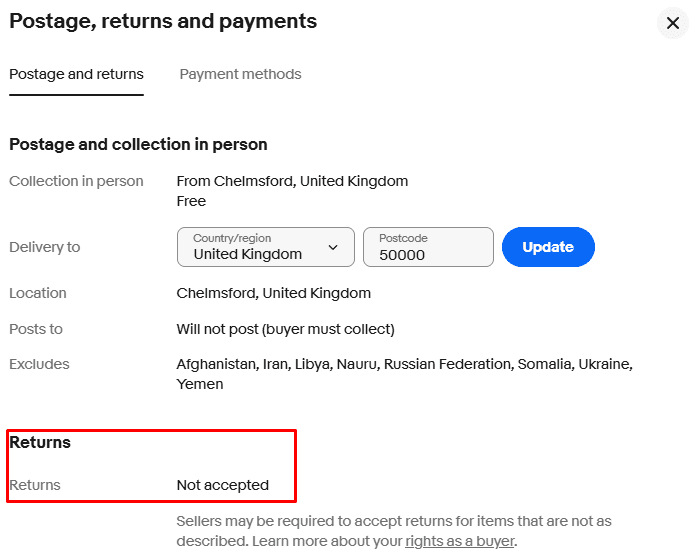
People often ask about a “3-day rule” on eBay. There isn’t one. eBay doesn’t grant car buyers a universal three-day return window. What you get is whatever the listing says about returns, plus the protection program, plus the right to open a dispute through eBay’s resolution process if the car wasn’t as described. Read the listing terms before you bid, not after.
Red flags on eBay
Walk away when you see these:
- The seller refuses to share the VIN, or the VIN doesn’t match the photos.
- Price is dramatically below market and the seller has a sob story (deployed military, divorce, dying relative) that explains why they need to sell fast.
- They want payment by wire transfer, gift cards, or any method outside eBay’s payment system.
- The listing says local pickup but the seller is suddenly out of state or out of the country and offers to “ship through eBay.”
- The account is brand new with zero feedback, or has feedback only from low-value non-vehicle items.
- Photos look like stock images, are watermarked, or show a different angle in every shot to hide damage.
If a seller pressures you to take the deal off-platform, that pressure is the scam. eBay’s protection only applies to transactions handled through eBay.
How to tell if a buyer is scamming you
If you’re on the selling side, the patterns are different but just as predictable. The classic move is a buyer who agrees to your price without negotiating, sends a cashier’s check for more than the asking amount, and asks you to wire the difference to their “shipper.” The check bounces a week later and your money is gone.
Other signs to watch for: a buyer who refuses to come see the car, will only communicate over text or email outside eBay’s messaging, claims to be overseas, or rushes you to release the title before payment clears. Real buyers ask specific questions, want to see the vehicle, and pay through traceable channels.
Buying a car on Facebook Marketplace
Facebook Marketplace has deep used-car inventory, especially from private sellers in your local area. To search effectively, set the category to Vehicles, then use the filters for price, mileage, year, transmission, and body style. The radius slider matters more than people think. Setting it to 50 or 100 miles instead of your default city often surfaces dozens of listings you’d otherwise miss, and prices can vary a lot between markets even an hour’s drive apart.
Marketplace doesn’t have a built-in protection program for vehicle sales. The transaction is between you and the seller, and that’s it. Which is why the inspection step is non-negotiable. Before you hand anyone money:
- Run the VIN through a vehicle history service like Carfax or AutoCheck. You’re looking for accident history, number of previous owners, and a sane service record.
- See the car in person, in daylight, on level ground.
- Bring someone who knows cars, or pay a local mechanic for a pre-purchase inspection. It costs $100 to $200 and saves multiples of that when it catches a hidden problem.
- Match the VIN on the dashboard, the doorjamb, and the title. If they don’t match, leave.
- Pay with a method that creates a paper trail. Cash works for small transactions, but a cashier’s check from your own bank is safer for the full price of a car.
Tools that find better deals faster
A few categories of tools are worth knowing about.
Meta-search engines like AutoTempest crawl multiple sites and pull listings from eBay, Cars.com, Carvana, and dozens of others into a single search. You stop bouncing between tabs and start comparing real inventory.
CarGurus runs an Instant Market Value (IMV) algorithm that compares each listing to recent sales of similar cars. It tags listings as Great Deal, Good Deal, Fair Deal, High Price, or Overpriced, with a percentage off market value. That’s a faster filter than reading every spec sheet. CarGurus also tracks “Days on Lot,” which tells you how long a car has been sitting. A vehicle that’s been listed for 60 days has a seller who is ready to negotiate.
These aggregators work by pulling real-time data on price, mileage, and condition through APIs and web scraping, then normalizing it into a single feed. The practical effect is that the inventory you can search is roughly the entire US market, which is the only way to take real advantage of geographic price differences.
Geography is underrated
Used car prices are not the same across the country. The same year, trim, and mileage of a Honda Civic can be $2,000 cheaper in Ohio than in California. Trucks cost more in regions that use them for work. AWD vehicles cost more in snowy states. Convertibles cost less in winter and more in spring.
Expanding your search radius from local-only to 50 to 100 miles, or to a full region, often reveals listings priced thousands lower. If you’re willing to fly out and drive home, the savings on a $25,000 vehicle can easily cover the trip and then some. You just have to find the listing first.
Speed is the real problem
This is what most guides skip. Good used car listings get bought in hours, not days. The 2018 Camry priced $3,000 below market doesn’t sit there waiting for you. By the time it shows up in your morning search, ten other buyers have already messaged the seller and one of them is in the driveway with cash.
Refreshing eBay Motors and Facebook Marketplace every few hours is not a strategy. It’s a part-time job. Email alerts from the platforms themselves are batched into hourly or daily digests, which means by the time the email lands, the deal is already gone.
The buyers who consistently get good prices, including the people who flip cars for a living, see new listings within seconds of posting. Before the listing has had time to attract a queue.
How Lotify fits in
Lotify is built for that speed gap. You open the Telegram bot, set your filters once (make, model, year range, price ceiling, mileage, distance, condition), and you get pinged the moment a matching listing goes live on eBay Motors or Facebook Marketplace. Notifications typically arrive in under ten seconds.
A few things make it work for serious buyers and flippers:
- It covers both eBay Motors and Facebook Marketplace from one place, so a Civic that pops up in Cleveland on Marketplace and another on eBay Motors in Pittsburgh both reach you in the same Telegram thread.
- No account login is required for the marketplaces themselves. No proxies, cookies, or captchas to maintain.
- You can run multiple alerts at once, which matters if you watch several makes, models, or ZIP codes. The Pro plan includes up to 12 active alerts, Pro Max up to 30.
- The same setup works for car parts. If you need a specific transmission, headlight assembly, or set of wheels under a certain price, alerts beat manual searching every time.
By the time someone else has refreshed their feed, you’ve already messaged the seller.
Free Trial Available
Lotify offers a 7-day free trial with no registration or credit card required. Test it out and see how many deals you’ve been missing.
A checklist before you buy
- VIN matches the title, the dashboard, and the doorjamb.
- Vehicle history report shows no major accidents, salvage titles, or odometer rollback flags.
- You’ve seen the car in person, in daylight, on level ground.
- A mechanic has looked at it, or a knowledgeable friend has come with you.
- Payment method is traceable.
- The price compares well to recent sold listings of the same year and trim, not just other current listings.
- The seller answers specific questions specifically.
If any of these is a no, the deal isn’t ready yet.
Buying a used car online comes down to being fast and being thorough, in that order. The fast part you can automate. The thorough part you can’t. Set up alerts so you stop missing listings, then take your time on the cars that actually deserve it.
Frequently asked questions
Is it safe to buy a car on eBay?
Yes, when you stay inside eBay’s payment and messaging system. eBay Motors runs a Vehicle Purchase Protection program that covers certain fraud-related losses on qualifying transactions. The protection only applies to deals handled through eBay, which is why scammers try to move buyers off-platform.
How fast do underpriced used cars sell online?
Often within hours, sometimes within minutes. A vehicle priced a few thousand dollars below market on Facebook Marketplace can collect ten or more messages in the first ten minutes after posting. The buyer who messages first usually gets the showing.
Is Facebook Marketplace safer than eBay for cars?
They are different rather than safer or less safe. eBay Motors gives you a structured process and a fraud protection program. Facebook Marketplace gives you direct access to private sellers and often lower prices, but no platform-level protection. On Marketplace, the inspection step does the work that eBay’s protection program does.
What is the best way to find a good deal on a used car?
Combine three things: a meta-search tool like AutoTempest or CarGurus to compare listings against market value, a wider search radius (50 to 100 miles or more) to take advantage of regional price differences, and Lotify that pings your Telegram within seconds of a matching listing appearing on eBay Motors or Facebook Marketplace. Evaluating deals well only matters if you see them before everyone else does.
Can I get scammed buying car parts the same way?
Yes, and the patterns are similar. Sellers who refuse to send detailed photos, demand payment outside the platform, or list parts at suspiciously low prices are running the same plays. Stick to platform payment systems, ask for the part number visible in a photo, and check seller feedback before sending money.

2026-05-10
