The Complete Guide to Scraping FB Marketplace
If you are a flipper, a car dealership, or an arbitrageur, you already know that Facebook is a goldmine for underpriced items and rare finds. But only if you can actually find what you’re looking for before someone else does.
The core problem? Manual browsing simply doesn’t work anymore for serious buyers.
Listings appear and disappear in a matter of minutes, search results are inconsistent, and highly valuable opportunities constantly get buried under thousands of irrelevant posts. This is exactly why more and more professional resellers and businesses are turning to Facebook Marketplace scraping options or even a specialized crawler to fully automate the discovery process.
In this comprehensive guide, you’ll learn:
- What a fb marketplace scraper actually is and how it functions under the hood.
- Why the native Facebook search often completely fails its users.
- The most effective methods to extract marketplace listings efficiently.
- The severe challenges and account risks involved in data extraction.
- A smarter, faster alternative utilizing real-time alerts.
Why Facebook Marketplace Search is Broken
If you’ve ever tried to hunt for a good deal on Facebook Marketplace, you’ve undoubtedly felt the intense frustration of the platform's limitations. It is simply not designed for speed, professional sourcing, or precision. And that creates massive headaches for buyers, flippers, and small businesses alike.
- The platform's caching means that a post might not show up in your search results until 15 to 30 minutes after the seller hits publish. In the flipping game, a 30-minute delay means the deal is already gone.
- Facebook actively ignores your specific keywords to show you “related” items. You search for a specific Honda Civic, and the feed is flooded with steering wheel covers and completely different car brands.
- The native “notify me” feature is notoriously unreliable. Instead of instant push notifications or an immediate email, you often get a generic digest hours later.
- Sponsored dealership ads and boosted posts are prioritized and pushed to the top of the feed, burying the high-margin, organic deals posted by motivated sellers.
- You set your radius to 10 miles, but the platform continuously sneaks in “ships to you” listings from across the country, wasting your time and cluttering your screen.
To make things even worse, the Marketplace search function can periodically break entirely due to internal technical issues. Cached data conflicts, mobile app bugs, outdated browser versions, or incorrect timezone settings can all severely cripple your search results.
Tired of missing deals because of Facebook's broken search?
Lotify offers a 7-day free trial with no registration or credit card required. Test it out and see how many deals you've been missing.
What is a Facebook Marketplace Scraper?
In technical terms, a facebook marketplace scraper is a custom script, automated bot, or specialized app designed to extract targeted data from Marketplace listings automatically and continuously.
Instead of a human manually clicking through pages and copying text, a facebook marketplace scraper tool programmatically collects structured data such as:
- The exact listing title
- Current price and historical price drops
- Geographic location and zip code
- Seller information (name, rating, history)
- Every uploaded photo and media asset
- The full product description
- The exact posting timestamp
- Contact methods or email details (if provided publicly)
This raw information can then be transformed and utilized for a wide variety of highly profitable purposes.
For example, individual resellers and flippers use a fb marketplace scraper to instantly identify heavily underpriced items (like smartphones or vintage furniture) and flip them for a quick profit. On a larger scale, a local auto dealership might deploy these tools to constantly monitor local private-party car sales to source cheap inventory for their lot. Other data-driven businesses rely on this extraction for cross-platform arbitrage opportunities, comparing FB prices against eBay or Amazon.
Methods to Scrape Facebook Marketplace Listings
There are several distinct ways to scrape data from Facebook Marketplace, and each method offers a vastly different balance between technical complexity, ease of use, and automation power. Your ultimate choice will depend on whether you prioritize coding flexibility, budget, or sheer speed.
Here is a breakdown of the four most popular approaches:
| Feature / Criteria | Custom Python Scripts | Browser Automation | Third-Party Scraping Tools | Alerts-Based Solutions (Lotify) |
|---|---|---|---|---|
| Easy of Setup & Use | Very Hard (Requires advanced coding) | Hard (Requires infrastructure) | Medium (Has a learning curve) | Very Easy (Simple use Telegram bot) |
| Real-time Data Delivery | Runs on scheduled loops | Incredibly slow rendering | Checked at intervals | Instant push notifications |
| Maintenance & Upkeep | Fixing code, buying proxies | Constant adjustments | Dependency on software updates | Fully self-managed backend |
| Bypassing FB's Anti-Bot | Hard & Expensive | Very Difficult | Mixed results | Handled seamlessly for you |
| Cost | Custom Prices (from 40$+) | Custom Prices (from 60$) | Custom Prices (from 20$) | 20$/month |
1. Python Scraping
If you have a background in programming, writing a custom Python script is one of the most powerful ways to extract data. By utilizing libraries like BeautifulSoup or HTTP clients to send a direct request to Facebook's backend APIs, developers can pull raw data efficiently.
- Best for: Developers who need highly customized, high-volume data extraction.
- Drawback: Facebook heavily protects its endpoints. Simple HTTP requests are quickly blocked without complex proxy management and header rotation.
2. Browser Automation
When simple requests fail, developers turn to browser automation. Using tools like Selenium, Playwright, or Puppeteer, you can program a bot to open a real web browser, log in, type in the search bar, scroll down the page, and scrape the HTML.
- Best for: Overcoming JavaScript-heavy pages and simulating real human behavior.
- Drawback: It is incredibly resource-intensive and slow. Plus, as soon as the platform changes a single CSS class, your bot breaks.
3. Third-Party Tools
For those who do not know how to code, third-party no-code scrapers which offer a plug-and-play solution. You simply input your target URL, and the tool uses its own cloud infrastructure to return a CSV or JSON file.
- Best for: Non-technical users who need historical data or one-off bulk exports.
- Drawback: These tools are typically not designed for sub-minute speed. They are great for research, but too slow for sniping deals.
4. Alerts-Based Solutions
If your main goal is to buy items before anyone else, a traditional facebook marketplace crawler might be the wrong tool. Instead of scraping thousands of irrelevant posts to analyze later, alert systems continuously monitor specific search parameters and send an immediate push notification or email the second a match goes live.
Facebook Marketplace Scraping Challenges
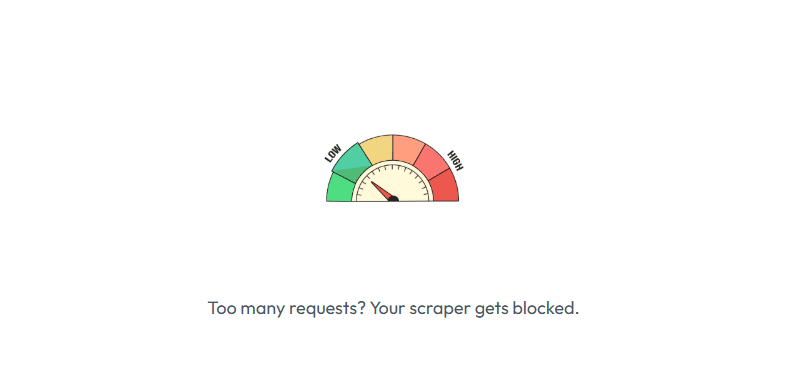
While it is technically possible to program and deploy a working fb marketplace scraper, in reality, it comes with a massive number of operational risks and exhausting, ongoing challenges. Facebook is aggressively hostile toward scraping, and maintaining a stable data pipeline often requires a full-time engineering effort.
- If you make too many requests too quickly, your bot will be hit with a CAPTCHA. If your software cannot solve it, the scraping stops immediately.
- Scraping while logged into your personal FB account is incredibly risky. The platform will flag unusual activity, resulting in shadowbans or permanent account deletion.
- You cannot refresh a page 100 times a second. Facebook tracks your IP address and will temporarily block you if you exceed their hidden rate limits.
- Facebook frequently changes its HTML structure and class names. A scraper that works perfectly on Monday might crash completely on Tuesday because a single div tag was renamed.
A Smarter Alternative – Lotify’s Real-Time FB Marketplace Alerts
For 95% of flippers and dealerships, dealing with proxies, bans, and broken code is a massive waste of time. You don't need a massive spreadsheet of data; you need to know exactly when a specific item is listed so you can buy it. This is where Lotify outshines a traditional fb marketplace scraper.
Lotify is an app designed specifically for speed. Instead of worrying about how to bypass a CAPTCHA, you simply set your target keywords, adjust your filters (like price and location), and let Lotify run in the background. The system acts as a high-speed, invisible facebook marketplace crawler, but instead of dumping raw code on your desk, it gives you a clean, real-time notification.
Whether you want an instant ping on your phone or an email alert, Lotify ensures you are the first person to view the post and message the seller. Want to see how it works? Check out our demo and see how much faster you can secure inventory.
FAQ
Is it legal to scrape Facebook Marketplace?
The legality of using a facebook marketplace scraper falls into a notorious gray area and heavily depends on exactly how the data is collected, the volume of your requests, and how you use that data commercially. Facebook’s Terms of Service strictly prohibit unauthorized automation and bulk data extraction. It is always highly recommended to review their policies before deploying your own bot.
How fast can I get listings using Lotify?
Speed is the core feature. With Lotify, you receive alerts almost instantaneously after a new, matching post is published to the platform. In many scenarios, you will be notified and look at the item well before the listing gains any organic traction in Facebook’s native search, giving you a massive head start over manual buyers.
Can Facebook ban my account for scraping?
Yes, Facebook’s security algorithms will swiftly restrict or permanently ban personal accounts if automated, bot-like activity is detected. This is the single biggest risk of facebook marketplace scraping when using your own scripts or browser extensions.
However, when using Lotify, you do not interact with Facebook through your own personal profile or run any local scraping scripts. The Lotify infrastructure operates entirely independently in the cloud. This means your personal account is completely insulated from the data extraction process, completely eliminating the risk of a scraping-induced ban.

2026-04-19
