Best Reselling Apps in 2026 (Where to Sell, What Tools to Use)
Reselling is two jobs. Finding items worth buying and selling them where people pay a fair price. This guide covers the marketplaces that are actually worth selling on in 2026, with current fees, real numbers and the problems sellers complain about on each one. Also the tools resellers use day to day, because nobody runs this business on marketplace apps alone.
All fees below were checked against the platforms’ own fee schedules in July 2026. A lot changed between 2024 and 2026, and many older guides still quote numbers that are no longer true.
Best selling apps and websites in 2026
eBay
eBay remains the widest reach you can get. Over 130 million active buyers, nearly every category from electronics to car parts to sealed trading cards, and the deepest sold price history of any platform, which matters when you price inventory.
The fees depend on where you live, and this is where old articles mislead people. In the US most sellers pay a final value fee around 13.25% plus a small per order charge. In the UK private sellers have paid nothing on domestic sales since October 2024, and eBay charges the buyer a protection fee instead. The same zero fee model now covers private sellers in Germany, France, Spain and most other EEA countries. Business sellers pay category based fees everywhere, and several of those went up in the UK and Germany in February 2026. One more piece of news worth tracking. In February 2026 eBay announced a $1.2 billion deal to buy Depop from Etsy.
What sellers complain about. Fee complexity for business accounts, since the final value fee, per order fee, regulatory fee and promoted listings all stack. And return abuse, where a buyer opens an “item not as described” case and the platform usually sides with them. Experienced sellers photograph everything before shipping for exactly this reason.
Facebook Marketplace
For local sales this is the default, simply because the buyers are already there. Listing is free, local pickup deals cost nothing, and shipped orders carry a 5% fee with a $0.40 minimum. Furniture, appliances and anything too bulky to ship move faster here than anywhere else.
The weak side is protection. Marketplace has the thinnest seller safeguards of any platform on this list, and the scam patterns are well known. Fake payment screenshots, phishing links sent in chat, buyers who negotiate for an hour and never show up. Sellers who stick to cash or verified in app payment on pickup rarely have problems. Sellers who accept a screenshot as proof of payment eventually do.
Vinted
Vinted has become the dominant fashion resale platform in Europe, present in more than 25 markets with tens of millions of active users. The model is unique among major platforms. Sellers pay nothing at all. No commission, no listing fee, no processing fee. Buyers pay a protection fee at checkout instead. For everyday and mid priced fashion in Europe it’s the first app to install.
Vinted’s reviews are polarized. On complaint aggregators the platform holds very low ratings, with hundreds of complaints, and the recurring themes are automated support that sends canned replies and disputes resolved against sellers. The scam sellers mention most in 2026 is the counterfeit claim, where a buyer reports a genuine item as fake, receives a refund and keeps the item. There are also classic off platform tricks, fake payment links and courier phishing texts, and payments made outside Vinted’s checkout are not covered by buyer protection at all. None of this makes Vinted unusable. Plenty of sellers move hundreds of items without issues. It does mean documenting what you ship and never taking a conversation off platform.
OLX
OLX runs classifieds across Central and Eastern Europe and beyond, with especially strong positions in Poland, Romania, Bulgaria, Kazakhstan and Ukraine. In these markets it’s less an option and more the default. Listings are mostly free, promotion is paid, and the range covers everything from phones to tractors. Underpriced listings appear and vanish here faster than anywhere else we monitor.
The main hazard is phishing. Scammers send links that imitate OLX delivery and payment pages to steal card details. The rule is the same as everywhere. Stay inside the app, never enter card data on a link someone sent you in chat.
Poshmark, Mercari and Depop
These three matter mainly for the US market, and their fees now differ dramatically.
Poshmark takes the most, a flat $2.95 on sales under $15 and 20% on everything at or above $15. It briefly restructured fees in late 2024 and rolled the change back within three weeks after seller backlash. In exchange for the 20% you get a prepaid shipping label and the most dedicated fashion buyer pool in the US.
Mercari became one of the cheapest platforms after a messy 2024. There’s no selling commission anymore, just payment processing around 2.9% plus $0.50. On a $50 item you keep about $48 versus $40 on Poshmark. The audience is broader too, so electronics and household items work, not just clothes.
Depop dropped its 10% commission for US and UK sellers in 2024, leaving only payment processing of about 3.3% plus $0.45. It skews young. Y2K fashion, streetwear, vintage band tees, and photos matter more here than anywhere else.
National classifieds in Europe
A surprising share of Europe’s secondhand trade runs on big national sites rather than one pan European app. Kleinanzeigen dominates Germany, Leboncoin owns France, Wallapop leads Spain, Marktplaats the Netherlands, and Willhaben Austria. Mostly free to list, monetized through promoted placements, and usually the first place local deals surface.
| Platform | Seller fees | Watch out for |
|---|---|---|
| eBay | ~13.25% US, 0% for private sellers UK/EEA | Return abuse, fee stacking for business |
| Facebook Marketplace | Free locally, 5% shipped (min $0.40) | Fake payment screenshots, no shows |
| Vinted | 0% for sellers | Counterfeit claim refunds, bot support |
| OLX | Mostly free, paid promotion | Delivery page phishing |
| Poshmark | 20% at $15+, $2.95 under | Highest fees on the list |
| Mercari | ~2.9% + $0.50 processing only | Thinner fashion audience |
| Depop | 3.3% + $0.45 processing (US) | Needs strong photos, young audience |
Most of our own users sell and source on eBay, Facebook Marketplace, OLX and Willhaben, which is why those are the platforms Lotify monitors first. If your marketplace isn’t on that list, write to us. We add new sites when enough people ask, so don’t hesitate.
The apps resellers actually use
Marketplace apps handle the transaction. Everything around it, pricing, listing, shipping, monitoring, runs on separate tools, and most full time resellers assemble a small stack. Here’s what that stack usually looks like in 2026.
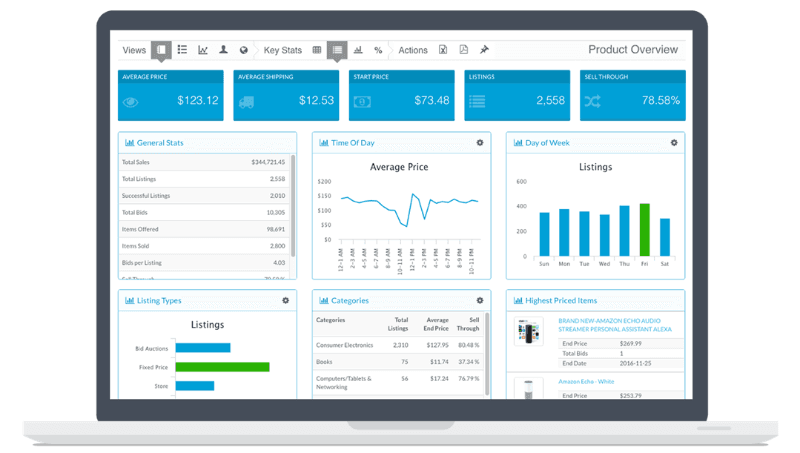
- Pricing research. Before buying anything, resellers check sold prices, not asking prices. Terapeak is built into eBay and free, and it’s still the standard for eBay comps. Google Lens identifies unknown items in the field for free. For antiques and collectibles there’s WorthPoint, a paid database of historical sold prices. Newer AI tools like Underpriced scan an item and return comps across platforms in seconds.
- Cross listing. Sellers who list on three or more platforms use tools like Vendoo, List Perfectly or Crosslist to create a listing once and push it everywhere, with auto delisting when something sells so you don’t sell the same item twice. Pricing runs roughly from $9 to $30 or more per month depending on volume.
- Shipping and photos. In the US, Pirate Ship gives discounted labels for free. PhotoRoom and Snapseed handle background removal and photo cleanup, which matters most on Depop and Poshmark where listings compete visually.
- Listing monitoring. This is the gap the other tools don’t cover. Sourcing on marketplaces is a speed game. Good underpriced listings sell in minutes, eBay’s saved search notifications arrive in batches with delays, and Facebook Marketplace alerts are inconsistent at best. If you track twenty keywords across three platforms, checking manually turns into a part time job of refreshing tabs.
The last problem is why we built Lotify, so read this part knowing it comes from the makers.
Lotify is a Telegram bot that watches marketplaces and pushes a notification the moment a new listing matches your search. One bot covers many searches at once. You add keywords with filters like price range for each marketplace you care about, and alerts land in Telegram on whatever device you’re holding. It currently monitors eBay, Facebook Marketplace, OLX, Willhaben, Auto Ria and Dim Ria, plus Telegram channels, and the interface works in English, Ukrainian, Polish, Romanian, Bulgarian, Kazakh and Portuguese.
There’s a 7 day free trial without a card, and paid plans start at $19.99 per month. If you want specifics for one marketplace, see our pages on eBay alerts and Facebook Marketplace alerts.
Free Trial Available
Lotify offers a 7-day free trial with no registration or credit card required. Test it out and see how many deals you’ve been missing.
FAQ
What is the best app for reselling in 2026?
There isn’t one. eBay has the widest reach and the deepest sold price history, which matters when you price inventory. Facebook Marketplace is the default for local and bulky items. Vinted dominates everyday fashion in Europe and charges sellers nothing. OLX is the default across Central and Eastern Europe. Pick by what you sell and where you are, not by app rankings.
Which reselling platform has the lowest fees?
Vinted, which charges sellers nothing at all — no commission, no listing fee, no processing fee, with buyers paying a protection fee at checkout instead. eBay also charges 0% to private sellers in the UK and most EEA countries. In the US, Mercari is the cheapest of the fashion-focused apps at roughly 2.9% plus $0.50 payment processing, versus Poshmark’s 20% on items at or above $15.
How much does eBay take from a sale?
It depends on where you live, and this is where older guides mislead people. In the US most sellers pay a final value fee around 13.25% plus a small per order charge. In the UK private sellers have paid nothing on domestic sales since October 2024, with eBay charging the buyer a protection fee instead. The same zero fee model now covers private sellers in Germany, France, Spain and most other EEA countries. Business sellers pay category based fees everywhere.
What scams should resellers watch out for?
Each platform has its own pattern. On Facebook Marketplace it’s fake payment screenshots, phishing links sent in chat, and no-shows — stick to cash or verified in-app payment on pickup. On Vinted it’s the counterfeit claim, where a buyer reports a genuine item as fake, gets a refund and keeps the item, so document what you ship. On OLX it’s phishing links imitating delivery and payment pages. The universal rule is to stay inside the app and never enter card data on a link someone sent you in chat.
How do resellers find underpriced listings before everyone else?
Sourcing is a speed game, and it’s the one part marketplace apps handle worst. Good underpriced listings sell in minutes, eBay’s saved search notifications arrive in batches with delays, and Facebook Marketplace alerts are inconsistent. Resellers tracking many keywords across several platforms use a monitoring tool instead of refreshing tabs — Lotify watches eBay, Facebook Marketplace, OLX, Willhaben, Auto Ria and Dim Ria and pushes a Telegram notification the moment a new listing matches a search.

2026-07-31
