How to Start Flipping Furniture?
Most people get into flipping furniture by accident. A neighbor puts a solid oak dresser on the curb, someone drags it home, spends a weekend sanding and painting it, and sells it for $240. The dresser cost nothing. The paint and new handles cost about $35.
That math is why furniture flipping keeps pulling people in. You buy (or find) something cheap, fix it up, and sell it for several times what you paid. There’s nothing to stockpile and nobody is selling you a $500 course as a prerequisite.
But is it actually a good side hustle, or just something that looks good on TikTok? It depends on how you source, what you pick, and whether you enjoy the work.
Is flipping furniture a good side hustle?
For the right person, yes. Furniture flipping is one of the few side hustles you can start this weekend with around $100 in tools and supplies. The skill floor is low. If you can sand a surface and hold a paintbrush, you can do your first flip.
It also scales with your effort. One flip a month is beer money. Four to six flips a month can add $1,000 or more to your income.
The catch is that it’s physical work. You’ll be hauling dressers up stairs, breathing through a dust mask, and washing paint out of your hair. People who expect passive income quit after the second flip.
It’s also local by nature. You’re limited by what shows up near you, which is exactly why sourcing speed matters so much. More on that in a minute.
You’ll probably enjoy it if you like working with your hands, you have a garage or a corner of a basement, and you get a small thrill from finding underpriced stuff. You’ll probably hate it if you have no storage space, no vehicle access, or you want income that doesn’t involve sweating.
Is flipping furniture profitable?
Yes, and the margins are better than almost any other resale niche. Experienced flippers aim for a markup of 200% to 400% on each piece.
Say you buy a tired dresser for $40. Paint, sandpaper, and new hardware run you $35. Total cost: $75. A clean, refinished dresser in a popular color sells for $200 or more in most cities. That’s $125 profit on one piece.
Free finds are even better. A decent couch that someone gives away (and people give away couches constantly, because nobody wants to move them) can earn you $100 to $300 after a deep clean. Sometimes the only work is shampooing the cushions.
How much can you make flipping furniture?
Realistic ranges, based on what flippers consistently report:
- Casual — one or two pieces a month: $100 to $400.
- Weekend regular — four to six pieces a month: $500 to $1,500.
- Part-time business — ten or more pieces a month: $2,000 to $5,000.
The single biggest factor isn’t your painting skill. It’s sourcing. Flippers who get to the good listings first make more, full stop.
Can you make money flipping furniture with no experience?
You can, because your first flips should be forgiving pieces. Start with small, solid wood items: a nightstand, a side table, a plant stand. They’re cheap to acquire, easy to transport in any car, and quick to finish.
Skip upholstery at the beginning. Reupholstering a wingback chair is a genuine craft, and dining chairs with woven or padded seats often take more hours than the profit justifies.
Also skip anything made of particleboard for now. Real wood is more desirable, holds paint better, and survives your beginner mistakes. Engineered wood swells if you over-wet it and chips when you sand it.
Your first three flips will be slow and you’ll make errors. That’s fine. Tuition for this business is about $40 a lesson.
What furniture is worth flipping?
Not everything heavy and brown is a goldmine. Here’s what to grab and what to leave.
Best pieces to flip
- Nightstands are arguably the best beginner piece. Everyone needs them, they sell in pairs, and they fit in a hatchback.
- Dressers are the classic money-maker. Solid wood dressers in the $200+ range sell fast in basically every market.
- Coffee tables are popular and easy. Mostly flat surfaces, minimal hardware, quick to refinish.
- Mid-century anything. If it has tapered legs and a Scandinavian look, photograph it before you even clean it. These often need nothing but oil.
How to spot quality
- Open the drawers and look at the corners. Dovetail joints — those interlocking trapezoid cuts — mean the piece was built well. Staples and glue mean it wasn’t.
- Check the weight. Solid wood is heavy. If you can lift a “wood” dresser with one hand, it’s laminate over particleboard.
- Look past ugly. Scratches, dated finishes, and horrible 90s paint jobs are your profit margin. Wobbly frames, water-swollen panels, and pet smells deep in the wood are not.
Where to find furniture to flip (and how to get there first)
Sourcing is the whole game. The refinishing part is teachable in a weekend. Finding a free solid-walnut dresser before forty other flippers do? That’s the edge.
Free sources
Trash day is real. In many neighborhoods, the night before bulk pickup is a furniture buffet. Drive a loop.
Neighbors and local groups give things away constantly. “Free, must pick up today” is the most beautiful sentence in this business. Estate cleanouts often have a last day where remaining items go free or near-free.
Paid sources
Facebook Marketplace is the biggest pond. The volume of underpriced and free furniture posted daily is absurd, especially Sunday evenings and the end of the month when people move.
eBay matters more than people think, particularly for smaller pieces and for selling. It also has entire categories of mispriced vintage items listed by people clearing out a relative’s house.
Thrift stores, garage sales, and auctions round it out. Slower, but you can inspect in person.
Here’s the frustrating part. The genuinely good listings — free solid wood, $20 mid-century nightstands, dressers priced by someone who just wants them gone — disappear within the hour. Sometimes within minutes. Refreshing Marketplace every twenty minutes will eat your whole evening and still miss most of the good posts.
This is exactly the problem Lotify solves. Set up saved searches for the things you flip (“solid wood dresser,” “teak,” “free nightstand,” and so on) and it watches Facebook Marketplace and eBay for you, then sends an alert the moment a matching listing goes up. It works internationally, so the same setup covers you whether you’re flipping in Austin, Manchester, or Vienna.
Free Trial Available
Lotify offers a 7-day free trial with no registration or credit card required. Test it out and see how many deals you’ve been missing.
The difference is not subtle. When you message a seller three minutes after they post instead of three hours, you’re first in line for the piece everyone else screenshots and sighs about.
How to flip furniture: the step-by-step process
Once you’ve got a piece home, the actual flip follows the same sequence almost every time.
1. Clean it properly
Mild soap and warm water clean wood furniture better than any specialty spray. Wipe it down, get into the corners, and let it dry fully. Half the time, cleaning alone reveals the piece is nicer than you thought. Occasionally it reveals you can skip painting entirely and just sell it as-is for a quick margin.
2. Repair and prep
Tighten loose screws, glue wobbly joints, fill chips with wood filler. Prep is boring and it’s also where durability comes from. A gorgeous paint job over a loose joint is a refund waiting to happen. If the old finish is thick, glossy, or peeling, use a paint stripper to take it off rather than fighting it with sandpaper.
3. Sand
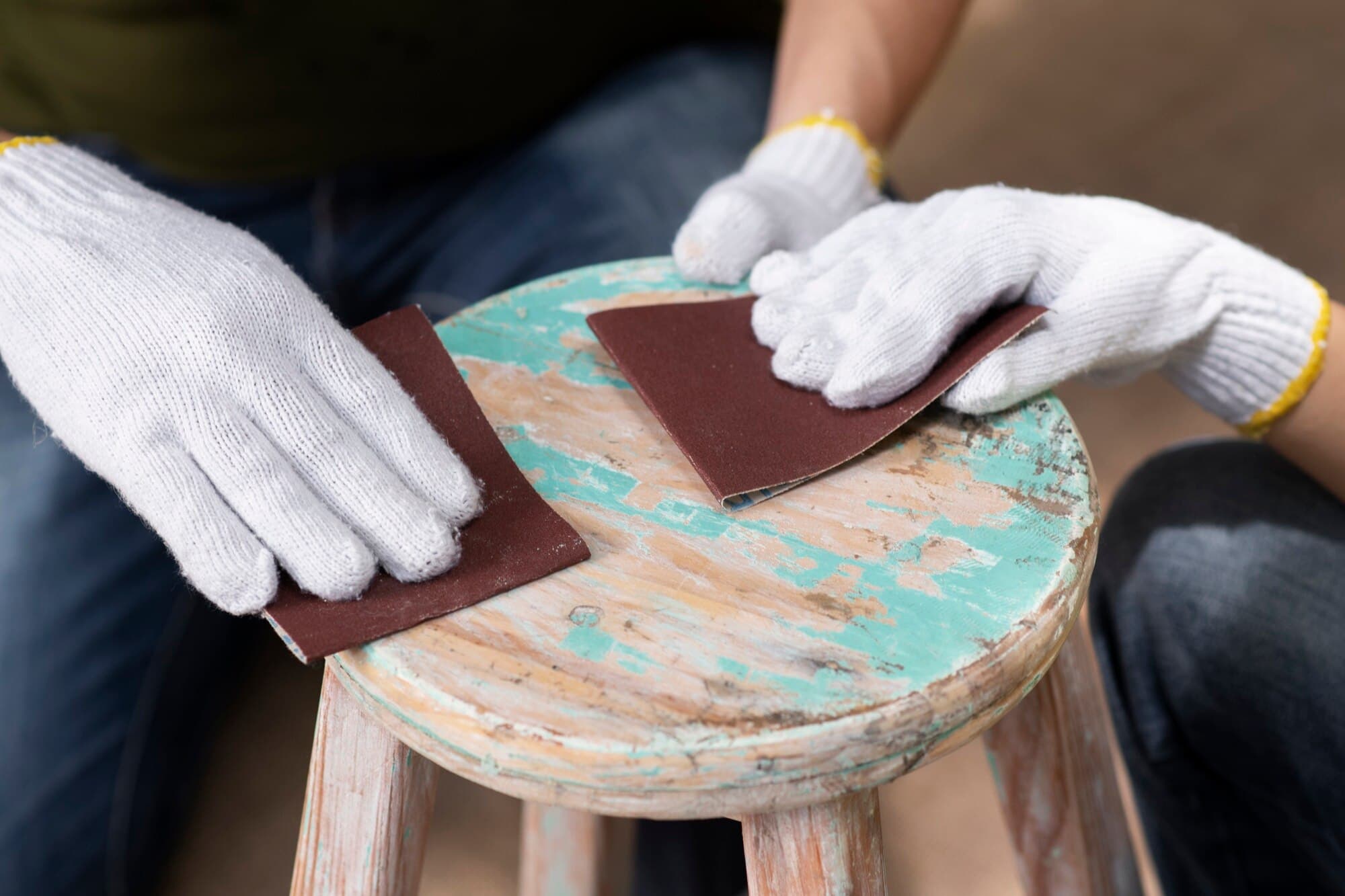
Sand every surface you plan to finish. Start with a coarser grit to knock down imperfections, then move to finer grits for smoothness. Keep several grits on hand; you’ll use all of them. Wear a mask — old finishes can contain things you don’t want in your lungs, especially on pieces made before the 1980s.
4. Prime
On glossy or previously sealed surfaces, primer is what makes the paint actually stick. Skipping primer is the number one reason beginner flips start chipping within a month, and chipped flips become bad reviews.
5. Paint or refinish
Two or three thin coats beat one thick one, every time. Let each coat dry fully. Neutral and currently popular colors sell fastest. When in doubt: white, black, sage green, or a natural wood finish.
6. Seal it
A protective topcoat (polyurethane or a water-based sealer) is the difference between furniture that survives a household and furniture that scratches the first week. Buyers can’t see the topcoat in photos, but they’ll feel it, and your reviews will reflect it.
7. Swap the hardware
Modernizing the hardware is the cheapest value-add in the entire process. Ten dollars of matte black or brass pulls can visually transform a dated dresser and justify a noticeably higher price.
Tools you need to start (around $200)
You do not need a workshop. The starter kit is short:
- sandpaper in several grits
- a sanding block or cheap orbital sander
- paint and brushes
- primer
- a topcoat
- wood filler
- screwdrivers
A reliable drill is the one bigger purchase worth making early, since you’ll need it for disassembling pieces and swapping hardware. A staple gun joins the list later if you ever touch upholstery.
Safety gear is non-negotiable: goggles, gloves, and a dust mask. Sanding old finishes without a mask is how you turn a side hustle into a doctor’s visit.
All of it together lands around $200, less if you borrow the drill.
How to sell your flips for more
The selling side gets ignored in most guides, which is strange, because two identical dressers can sell for $120 or $260 depending entirely on the listing.
- Photos do the heavy lifting. Shoot in natural light, near a window, during the day. Clear, bright photos consistently outsell dark phone-flash shots of the same piece.
- Stage it. A dresser with a lamp, a plant, and two books on top lets buyers picture it in their home. A dresser against a garage wall looks like a chore.
- Write like a person. Mention the wood type, dimensions, and what you did to it (“stripped, sanded, primed, painted, sealed”). Buyers pay more when they understand the work behind the price.
- List everywhere. Don’t marry one platform. List on Facebook Marketplace and eBay at minimum, plus whatever local classifieds dominate your country. More eyes, faster sales, better prices.
- Offer delivery. Offering local delivery for a fee, or even free within a few miles, lets you charge a higher price and opens your listing to every buyer without a truck. That’s most buyers.
So, should you start?
If you’ve read this far, probably yes. Start tiny: one free or sub-$30 solid wood piece, $100 of supplies, one honest weekend. You’ll know by Sunday night whether this is your thing. The flippers who make real money aren’t more talented with a paintbrush. They source faster, pick solid wood, prep properly, and sell with good photos. Every one of those is learnable.
Find your first piece this week. Set up your Lotify alerts for the keywords you want on Facebook Marketplace and eBay, keep $50 in cash ready, and grab the next underpriced dresser before someone else does.
FAQ
Is flipping furniture profitable?
Yes, and the margins beat almost any other resale niche. Experienced flippers aim for a 200% to 400% markup per piece. Buy a tired dresser for $40, spend about $35 on paint, sandpaper, and hardware, and a clean refinished dresser sells for $200 or more in most cities — roughly $125 profit on one piece. Free finds push margins even higher.
How much can you make flipping furniture?
It scales with effort. A casual flipper doing one or two pieces a month makes $100 to $400. A weekend regular doing four to six pieces makes $500 to $1,500. People who treat it as a part-time business — ten or more pieces a month — clear $2,000 to $5,000. The biggest factor is not painting skill, it’s sourcing speed.
Can you flip furniture with no experience?
Yes. Start with small, solid wood pieces like a nightstand, side table, or plant stand — they’re cheap, fit in any car, and are quick to finish. Skip upholstery and particleboard at first. Your first few flips will be slow and you’ll make mistakes, but tuition for this business is about $40 a lesson.
What furniture is worth flipping?
Nightstands, dressers, coffee tables, and anything mid-century modern are the reliable money-makers. Look for solid wood: open the drawers and check for dovetail joints, and pick the piece up — solid wood is heavy, while laminate over particleboard is light. Scratches and dated finishes are your profit margin; wobbly frames, water-swollen panels, and deep pet smells are not.
How do I find furniture to flip before other flippers do?
The best listings — free solid wood, $20 mid-century nightstands, dressers priced to disappear — sell within minutes. Instead of refreshing Facebook Marketplace all evening, use a tool like Lotify that watches Facebook Marketplace and eBay for your keywords and sends an alert the moment a match goes live, so you message the seller first instead of three hours later.

2026-06-18
